Where Have All The Wildflowers Gone?

By Della Lewandowski
2FB744D2-FC20-45D0-83A6-F17D5192E959.JPG

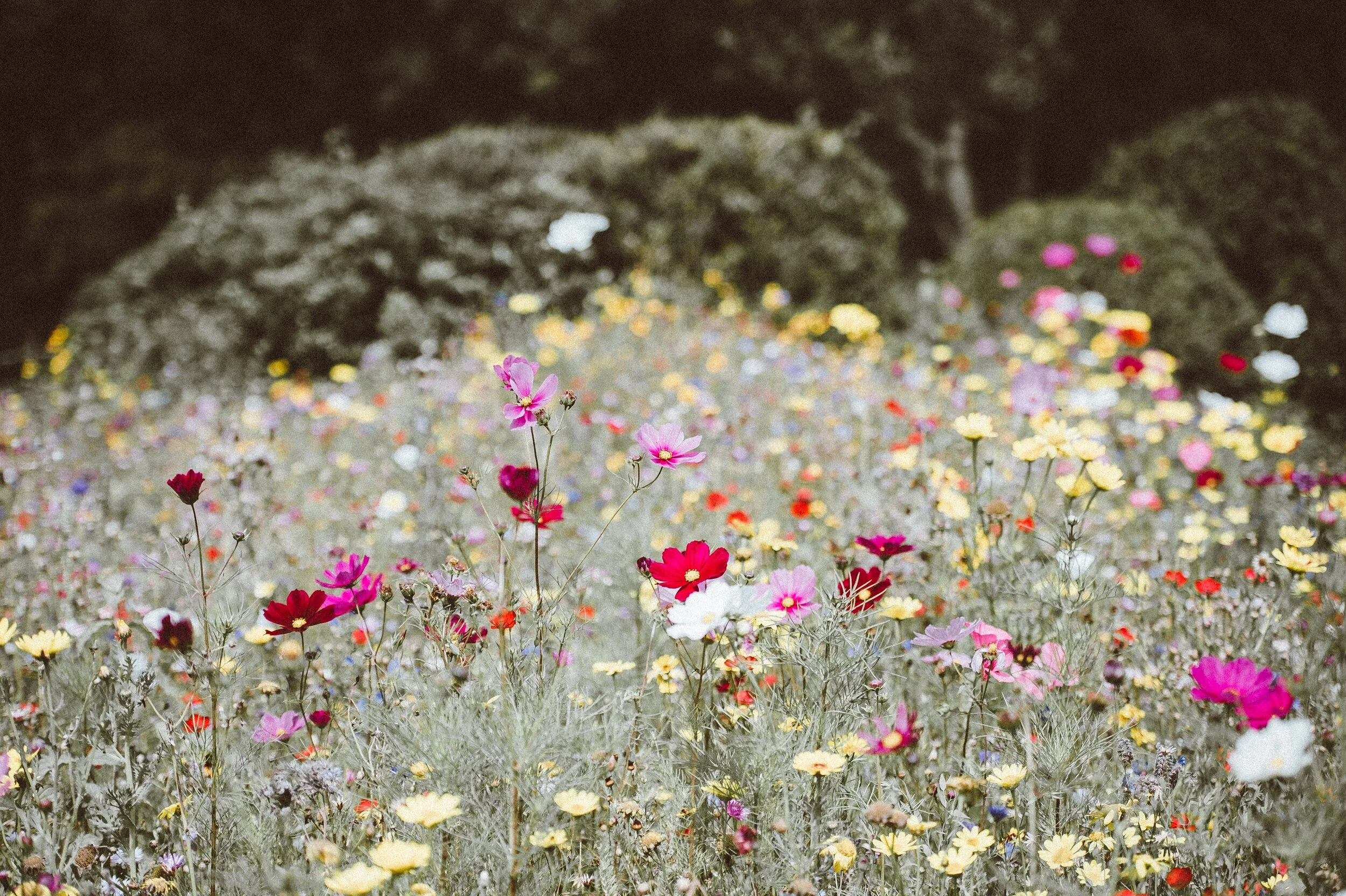
Wildflower meadows are recognised as being havens for wildlife and biodiversity. They’re often home to over 150 different species of flowers and grasses, that in turn support a countless amount of other species. But finding flower-rich meadows and grasslands is not as easy as it used to be.

Since the 1930’s 97% of wildflower meadows have been lost, a shocking loss of 7.5 million hectares! These grasslands now cover only 1% of the UK’s land area, predominantly in scattered fragments that are at risk of being destroyed. This means that the once abundant wildflowers are now threatened, and their decline is having a knock-on effect on the species that depend on them. 

Destruction of the Meadows

Wildflower meadows were created as part of traditional farming practices. Each farm would have an area to grow some crops and a permanent pasture for grazing animals, as well as a meadow to produce hay as feed over the winter months. This created an annual management cycle that kept everything in order. Big changes came to this method during World War II, when 6 million acres of grassland was ploughed in order to grow more cereals. This was the start of the decline.

Numerous Knock-On Effects

The most obvious effect of meadow destruction is causing certain species of wildflowers to become threatened. Snake’s-head fritillaries were once abundant along rivers and in wet meadows, but have now become a rare sight and are classified as ‘Vulnerable’ on the Vascular Plant Red Data List for Great Britain.

However the effects reach much further than a decline in the number of plants. As the wildflowers disappear so do the insects that rely on them for survival, as well as animals that feed on insects such as bats, hedgehogs and birds. In the UK there are over 250 bee species that all play a vital role in pollinating our crops. Wildflower meadows are ideal habitats for bees, and since their decline bees have begun to evolve to only eat a limited number of pollens. These restrictions cause a rise in food competition, which in turn causes a decline in bee populations.

122E34D2-2C16-4E16-9E4F-9D8140434DE4.JPG

What Can Be Done?

Charities such as Plantlife have developed projects aimed at improving the current situation for wildflower meadows and grasslands. National Meadows Day is now celebrated on 4th July, with events and workshops being held all over the country to help educate people about the importance of them. 

Plantlife are using their expertise and donations to properly restore meadows so that they can thrive and support a wide range of other species. They want to naturally regenerate these habitats using the plants from that local area instead of commercial wildflower mixes, as this will help safeguard the distinctiveness of the local flora.

We are helping to support the fantastic work done by Plantlife by donating 10% of the sale price of our wildflower products to them. This includes our botanical prints and coasters.

10 Craft Activities To Do At Home With The Kids

As many of us prepare to be housebound for a while with the kids getting under our feet, thoughts (or panic) turn to “how are we going to entertain the kids?”. I am likely to be in exactly the same boat as I’m expecting my three year old son to be sent home from nursery any day now.

So to help you out (and me also), I’ve pulled together some really fun craft activities to do with your kids at home. Plus, if you take part and tag us in your photos on Facebook, Instagram or Twitter, you could win £25 worth of Creature Candy goodies! One lucky winner will be chosen on Friday 17th April 2020. Please use the hashtag #creaturecandy

I will also be publishing a blog later on wildlife activities to do outside with your kids, and also wildlife quizzes and a poetry competition! But for now, here are a few ideas to keep the little ones entertained:


Make A Hedgehog Mask

What you need:

A hedgehog mask template– print and cut out, including the eyes (get template here) Use card or thick paper.

An old bag to collect leaves etc.

Scissors

Sellotape

An ice lolly stick

PVA glue and glue spreader

Some old newspaper

What to do:

Go outside and collect lots of natural materials to decorate your hedgehog mask, in your collecting bag. These could be leaves, twigs, grass, little stones etc. – so nothing man-made. Do not pick mushrooms or berries as these may be poisonous! And be carefully of spiky plants and nettles!

Back indoors, carefully cut out your hedgehog mask and tape an old lolly stick to the bottom end of the mask to be the handle.

On some old newspaper empty your bag of natural materials and sort out what you will use to decorate the mask, then get gluing! Cover your whole mask with materials and once satisfied leave to dry.

Now wash your hands! Once the glue is dry you will be ready to become a hedgehog!

For more information visit the People’s Trust For Endangered Species.

Don’ forget to tag us in your photos on social media - @creaturecandy9


Make A Pine Cone Bird Feeder

Image: RSPB

Image: RSPB


What you need:

Pine or fir cones (dried out so they don't open)

Bird seed

Raisins

Peanuts

Grated cheese

Suet or lard

A mixing bowl

Scissors

String

What to do:

Make your bird mix. Allow the lard to warm up to room temperature, but don't melt it. Then cut it up into small pieces and put it in the mixing bowl.

Add the other ingredients to the bowl. Mix them together with your fingertips until the fat holds the squidgy mess together.

Now group your cones together and loop the string around the top of them. Then pack the sticky bird mix around the cones with your hands, creating a ball shape.

Put your cones in the fridge to set for an hour or so. After that, they'll be ready to hang up and are bound to bring the birds flocking.

TIP - make sure you hang the feeders near to some vegetation so birds have somewhere to quickly hide away.

For more information visit the RSPB website.

Don’t forget to tag us in your photos on social media - @creaturecandy9


Paper Roll Animals

What you need:

Scissors

Paint

Googly eyes

Glue

Paper

Pipe cleaners (for the monkey)

What to do:

For the elephant, cut out a small piece of the roll to create a gap between the elephants legs.

Use extra card or paper to cut out some ears and a trunk, allowing an extra tab to be folded over and stuck to the tube.

Paint the tube, ears and trunk grey and leave to dry.

Once dry, stick the ears and the truck onto the tube.

Stick on two googly eyes.

To finish, paint on some toes with white paint.

Leave to dry.

For other designs visit Frugal Fun For Boys & Girls website.

Don’t forget to tag us in your photos on social media - @creaturecandy9


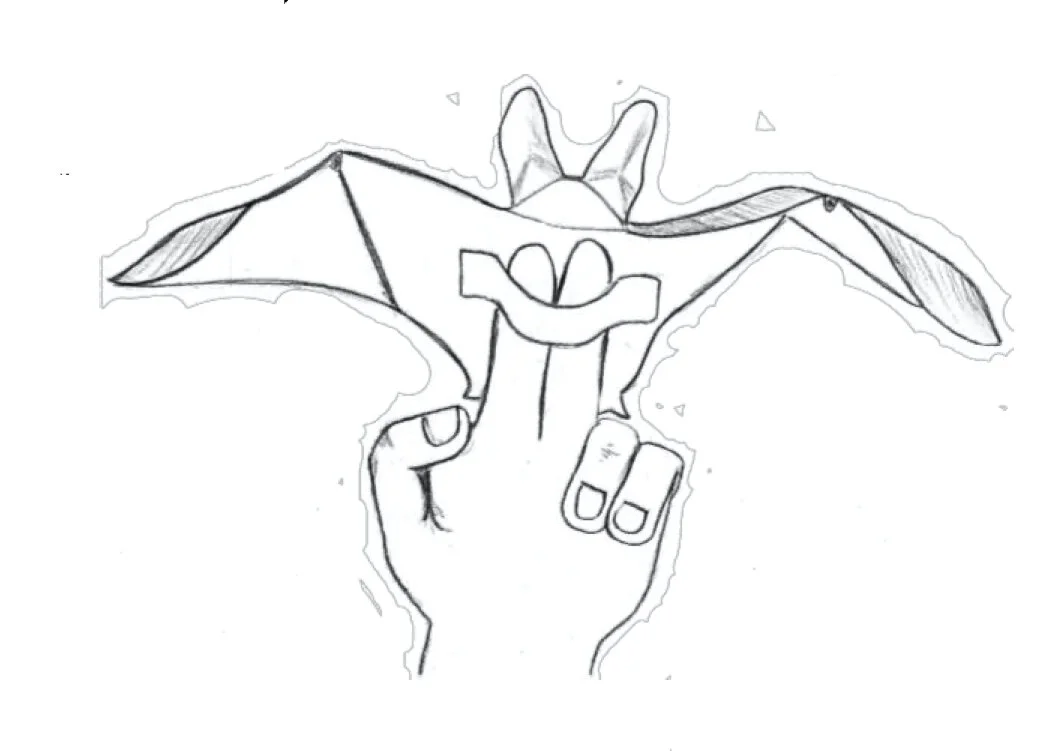
Bat Finger Puppet

Image: Bat Conservation Trust

Image: Bat Conservation Trust

What you need:

Finger puppet template

Scissors

Pencil

Tape

Colouring pencils

Natural materials such as leaves and dried grass

Glue

What to do:

Download and print the finger puppet template

Cut out the bat, or use this as a template to drawn and cut one out of thick card.

Either colour in the bat or cover using natural material found in the garden, such as leaves using glue.

Leave to dry.

Affix a strip of paper about 6cm long onto the underside of your bat, leaving a loop big enough to slip one or two fingers through.

Make creases in the wings for the bat’s fingers, and bend its head and ears up slightly too.

For more information, visit the Bat Conservation Trust website.

Don’t forget to tag us in your photos on social media - @creaturecandy9


Clay Leaf Prints & Pendants

Image: artfulparent.com

Image: artfulparent.com

What you need:

Small leaves and ferns

Air dry clay

Wax paper, parchment paper, or a plastic placemat/tray

Drinking straws

String or elastic thread

Watercolor paint (optional)

Beads (optional)

What to do:

Lay a small leaf on the wax paper, vein side up.

Pinch off a small piece of air dry clay (maybe a tablespoon or two) and roll into a ball between your hands.

Set the clay ball on the leaf, then press down with the palm of your hand to flatten it.

Carefully lift the clay disk, turn it over, and peel away the leaf.

(Optional) If you’d like to hang your leaf print, poke a hole at the top of your disk with a drinking straw.

Repeat process with additional leaves and clay balls.

Let dry thoroughly. This may take two to three days.

If desired, paint the clay leaf print with watercolors. You can also decorate them with coloured pencils.

Thread string through the hole and tie to form a loop for ornaments or a pendant. Add beads if desired. You can also string several clay disks together into a garland.

For more information visit The Artful Parent website.

Don’t forget to tag us in your photos on social media - @creaturecandy9


Make A Journey Stick

Image: growingfamily.co.uk

Image: growingfamily.co.uk

What is a journey stick?

A journey stick (also known as a story stick or nature stick) is essentially a memento of a nature walk, featuring items collected whilst on the walk. These might be things like leaves, twigs, flowers, feathers or anything else natural that you find along the way.

What you need:

Either a piece of cardboard with double sided tape attached to secure the items to the card,

or….

A large stick, attaching items to it using string or wool.

What to do:

Go for a walk somewhere (this could be out in your garden) and look for little pieces of nature to add to your stick. Here are some ideas of what to look for:

Feathers

Pine cone

Grass

Flowers

Shells

Leaves

Twigs

Stones

Buds

For more information, take a look at the Growing Family website.

Don’t forget to tag us in your photos on social media - @creaturecandy9


Mallard Duck Handprint

Image: craftymorning.com

Image: craftymorning.com


What you need:

Brown paint

Paintbrush

Green/yellow feathers

Glue

Scissors

A googly eye

Green/yellow paper or card

What to do:

Start by painting your child’s hand with brown washable paint and pressing it onto a white sheet of paper.

Cut out a green duck head and beak. Glue them together and add a googly eye.

Glue on two feathers for the wings.

Add some duck legs to finish off.

IDEA - why not try creating other birds such as blackbirds and robins?

For more information visit the Crafty Morning website.

Don’t forget to tag us in your photos on social media - @creaturecandy9


Egg Carton Bunnies

Image: thebestideasforkids.com

Image: thebestideasforkids.com

What you need:

Egg Carton

Acrylic Paint – pink, yellow and baby blue

Scissors

Googly Eyes

Pink Pom Poms

White Foam or Card

Masking Tape

Glue

Black Marker

Mini eggs

What to do:

Begin by cutting 2 egg compartments and trimming off any excess to create a flat top to the cartons.

Place the trimmed egg cartons on top of each other with the flat tops touching. Take a piece of masking tape and put a small piece on the back of the cartons.

Then open up the egg carton and place another piece of masking tape on the inside.

Paint the egg cartons a spring colour.

Cut 2 bunny ear shapes out of the foam / card.

Once the paint has dried, add the eyes and pink pom pom for the nose with glue. Glue on the ears as well.

Take a thick black marker and add whiskers and eyelashes if desired.

Now fill with mini eggs and enjoy!

IDEA - These would be great to use for your Easter Egg hunt or as decoration on a table for your Easter dinner!

For more information visit The Best Ideas for Kids website.

Don’t forget to tag us in your photos on social media - @creaturecandy9


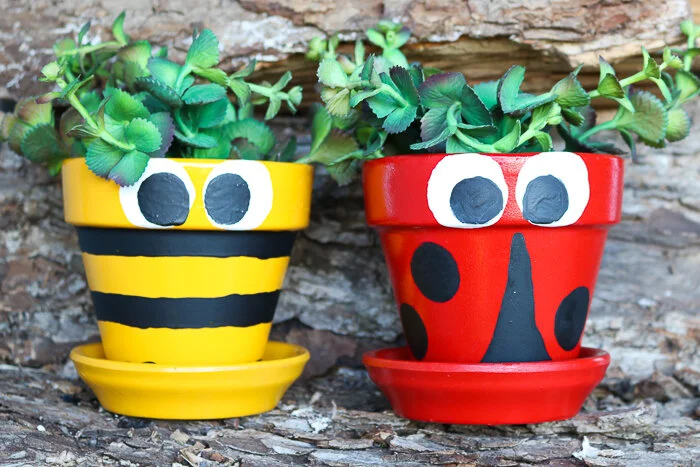
Bee & Ladybird Plantpots

Image: thecountrychiccottage.net

Image: thecountrychiccottage.net

What you need:

Clay pots

Clay saucers

Acrylic paint in yellow, red, white and black

Round sponge brushes

Paintbrushes

What to do:

Paint one pot and one saucer yellow, and paint the other pot and saucer red.

Allow to dry.

For the red ladybird pot, use a white round sponge brush to add the white portion of the eyes. Then use a paintbrush to start adding the black accent down the middle as well as all the way around the bottom. Be sure to paint all the way around the bottom with the black line to give your pot a finished appearance. Then use a smaller round sponge brush to add the dots on the ladybug. Again be sure to go all the way around the pot. Once the white portion of the eyes is dry, you can add the black portion with a small round sponge brush. Then allow your entire clay pot to dry before using.

For the yellow bee pot, start with the white portion of the eye. This time use a paintbrush to paint on stripes around the body of the pot. The first line should be right under the lip of the pot. The second should be around the bottom. Then go back and split the difference between the two with a third line. Make the lines the width of your paintbrush. Finally, once the white of the eyes is dry, add a second black dot with a smaller sponge brush.

IDEA - why not try painting other animals such as tigers and pandas?

For more information visit The Country Chic Cottage website.

Don’t forget to tag us in your photos on social media - @creaturecandy9


Mini Bug Hotels

What you need:

Large plastic bottle or other waterproof container

Scissors

Natural materials to go inside

String

What you do:

Firstly, go outside and collect lots of different natural materials to fill your bug house. Some examples include: Leaves, Pinecones, Bark & Twigs, Stones, Flowers, Moss, Wood Chips, Nut Shells, Bamboo, Sticks, Grass, Shells, Twine.

Cut one side off your plastic bottle, allowing a lip at the bottom and at the top to stop materials sliding out.

Start to build up your Bug Hotel with all the items you have collected. Be inventive! Use the photo above for ideas.

Take the lid off the bottle and made a small hole in the top large enough to thread your string through to make a loop. Place the lid back on the bottle.

Hang your bug hotel somewhere outside where it will be sheltered and near to vegetation.

Remember to go and check up on it after a few weeks and see who has moved in.

For more information visit the Super Simple website.

Don’t forget to tag us in your photos on social media - @creaturecandy9


Rock Pets

Image: loveyourlittles.com

Image: loveyourlittles.com

What you need:

Rocks

Paint

Paintbrushes

Googly Eyes

Glue

Clear, Protectant Spray (optional)

What to do:

Google images of the animals that you want to paint to get an idea of how to paint it. Keep it simple!

TIP - Paint the rocks white first. This will make it so the colour is more vibrant with less coats of paint.

If you make a mistake, you can typically use a wipe, and wipe it off quickly without much mess or destruction.

Once your design is finished leave to dry.

Spray a layer of protectant spray and leave to dry again (optional).

Add the googly eyes last with glue.

IDEA - why not paint several different animals, hide them in the garden and have an animal hunt with your kids?

For more information visit the Love Your Littles website.

Don’t forget to tag us in your photos on social media - @creaturecandy9


Share Your Photos On Social Media To Win!

We’d love to see your creations so social media, so please do post some photos and copy us in, and we will repost them for you. We will also choose one lucky artist to win £25 worth of Creature Candy goodies! You can choose your favourite designs and products.

Instagram - @creaturecandy9

Facebook - @creaturecandy

Twitter - @creaturecandy9


About Creature Candy

Creature Candy is a small business, with the primary aims of raising awareness of Britain’s declining wildlife and raising funds for British wildlife charities. We currently support 12 different charities including Bat Conservation Trust, British Trust for Ornithology and People’s Trust for Endangered Species.

Educating children about wildlife issues and encouraging play outside is incredibly important to us. If you have any feedback or suggestions on how we can do this, we’d love to hear your views.

Please email Lizzie - lovenature@creaturecandy.co.uk


Thank You & Take Care

And finally…….

We wish you all good heath, love and happiness in these crazy times.

xxx

Best Wildlife Gifts For Mother's Day

By Della Lewandowski

Mother’s Day is approaching (March 22nd), which means it’s time to start looking for that perfect gift. But what can you buy to say thank you to the most important woman in your life? To make things a little easier, we’ve compiled a list of some of our favourite wildlife gifts to give you some inspiration. 


Creature Candy - Set of 6 Botanical Coasters £20

This set of melamine coasters features hand drawn designs of some of Britain’s declining wildflowers. Designs include cornflower, devil’s-bit scabious, chamomile, snake’s-head fritillary, cowslip and pyramidal orchid.

The set includes one of each design, however you can choose your own combination by emailing us with your choice once your order has been placed!

To make things even better, 10% of the purchase price will be donated to Plantlife.


Big Wild Thought – Badger Tote Bag - £12

Available in four different colours, it’s hard to go wrong with this minimalistic tote bag!

This bag boasts a beautiful embroidered badger, however other designs are available, such as bats, dolphins and foxes.

For every sale of this tote bag, 10% of the retail cost will go to the Derbyshire Wildlife Trust.


Green&Blue – Birdball Belle Bird Feeder - £29

The Belle bird feeder is the perfect way to feed smaller garden birds such as tits, sparrows, nuthatches and finches.

The design prevents damage to birds’ feet and beaks that can happen with mesh or wire, as well as deterring larger birds and squirrels from stealing the food.

This bird feeder is easy to clean, easy to refill and completely weather proof, making it the perfect gift for garden and nature lovers!

Available in six colours.


Bumble Magazine – 1 Issue £7

Bumble is a volunteer-run, biannual magazine all about nature in the UK. They focus predominantly on declining species, giving advice on how we can all do our bit to help.

This simple, straightforward publication offers a chance for readers of all ages to engage with nature, whilst educating them on the importance of the natural world.

From experienced ecologists to those with an interest in how nature is portrayed in art, there’s something in here for everyone!


Wildcare – Bee & Bug Biome - £24.70

This attractive bee and bug habitat provides a home for solitary bees, ladybirds and other beneficial insects.

The tasteful design is constructed from durable natural FSC timber and painted with water-based paints.

Not only does it look good in your garden, it’s great for nature!


Summer Lane Studio – Birth Flower Personalised Family Print - from £25

Summer Lane Studio creates pretty bouquets using the birth flowers for each members of a family, producing a unique combination for your family. Like birthstones, each month has it’s own birth flower.

Printed on 100% recycled card 300gsm thick to give a vintage-inspired look and feel.

Summer Lane Studio are proud supporters of World Land Trust’s ‘Plant a Tree’ project in tropical forest in Borneo.


Seedball – Mum’s Meadow - £6

Help her make her garden more wildlife-friendly with the limited edition design wildflower tin!

The mix is based on the Plantlife Mix, which includes five native wildflowers that are most likely to thrive in the nutrient rich soils commonly found in gardens.

Proceeds from the sale of every tin go directly to supporting Plantlife’s new nature reserve – Greena Moor in Cornwall.

We've Made Another Donation to the Bat Conservation Trust

Baby lesser horseshoe bat by Dan Whitby

Baby lesser horseshoe bat by Dan Whitby

Thanks to your support, we have just made another donation to the Bat Conservation Trust of over £300! This money will be used to fund the National Bat Helpline, which receives over 14,000 enquiries each year from building and planning professionals, householders with bat roost questions, and members of the public who have found injured and grounded bats.

As a result, thousands of bats and their roosts are conserved. The Helpline relies on the hard work and dedication of hundreds of volunteers. This includes bat carers who rehabilitate injured bats, roost visitors who help homeowners with bat roosts and volunteers that answer phones on the Out of Hours Helpline in the summer.

Thank you everyone for buying our bat products and helping us look after our wonderful bats!

If you’d like to volunteer for the bat helpline you can find more information here.

SHOP BATS

How Do Animals Find Love? Or Do They?

By Della Lewandowski

The arrival of Valentine’s Day last week brought big romantic gestures and tokens of love for many of us. From grand rose bouquets to trays of sickly heart-shaped chocolates, there are numerous ways in which humans portray their love for one another. But in nature it’s not about finding love, the aim is to discover a mate that is one of the best examples of the species to create the next generation with. 

In order to attract a mate, courtship displays are often carried out (usually by a male) to show off to potential partners in the hope of getting selected. The variation of displays between species varies significantly, from elegant songs and dances, to fighting other potential mates. Here are some examples of courtship rituals in nature:

Woodpeckers

Pileated woodpecker - native to North America.

Pileated woodpecker - native to North America.

There is variation in displays between different woodpecker species, however there are two main methods they use:

Drumming – Unlike other birds, woodpeckers do not have a distinctive mating song, instead their drumming is a handy way of communicating. They rapidly tap their beaks against objects to create sound that resonates for long distances, which is recognised by other woodpeckers by its pattern and tempo.

Display flights and dances – A common method used in nature. In pileated woodpeckers (native to North America), both individuals throw back their heads and pointing their bills in the air. They then strike a pose in which they hold for a few seconds, hop to the side and repeat.

Watch it here.

Hedgehogs

Hedgehog in leaves.jpeg

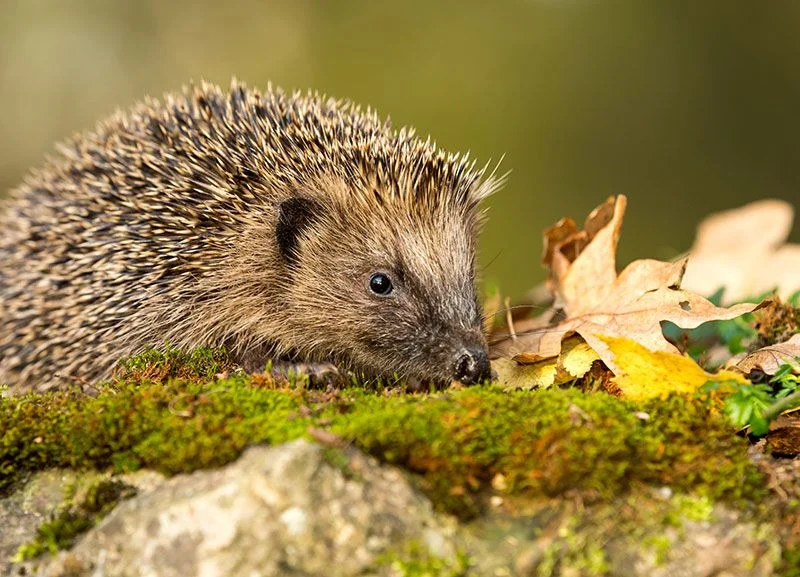
Hedgehog breeding season begins in May, and can be recognised by strange noises coming from the undergrowth in your garden! In their courtship ritual, boars will repeatedly circle the sow, initially often reacting aggressively. She makes loud rhythmic snorting and puffing sounds, as well as erecting her spines. The noise can attract other males to the area, which then interrupt the display. This causes a fight between the males, head-butting and chasing one another to assert their dominance. The ritual of circling can last for hours, allowing the sow to get a good idea of the fitness of the male. If she is impressed, she will then flatten her spines to prevent injuring the male during mating. No pair bonding behaviour has been witnessed in hedgehogs, boars will leave the doe to rear the young alone and she can go on to mate with other partners. 

Watch them here.

Brown Hares

Photo by Kevin Sawford via Suffolk Mag.

Photo by Kevin Sawford via Suffolk Mag.

Brown hares are often referred to as ‘mad March hares’, as they can be found frantically boxing one another. It gives the appearance of two competing males fighting, but in fact this occurs when females are attempting to escape unwanted advances from males. As females come into season at this time of year, males seek them out and chase them, before the female gets tired of it and challenges him to a boxing match!

Watch them here.

Hen Harrier

Photo by Graham Catley via Pinterest.

Photo by Graham Catley via Pinterest.

When attempting to attract a female mate, male hen harriers perform an impressive display known as ‘skydancing’. Once a suitable candidate is spotted, the male repeatedly flies steeply upwards, somersaults at the peak and falls rapidly to exhibit his aerial abilities. If successful in this, both individuals will collect materials to begin building a nest for the next generation. 

Watch this spectacle here.

SHOP


February Competition & New Partners!

For February we have teamed up with Bumble Magazine, a volunteer-run, biannual magazine all about nature. They focus on wildlife around the UK, predominantly endangered species, offering advice on how everyone can do their bit to help. 

Their publications are beautifully presented, as well as being simple and straightforward, aiming to educate and inspire readers of all ages. Whether you’re an experienced ecologist or want to learn a bit more about the wonderful wildlife around you, there’s something in here for everyone!

Giveaway!

To celebrate we are running a giveaway, including an A4 bee print and bee notebook from Creature Candy, and a copy of Bumble magazine.

To be in with a chance of winning, all you need to do is:

A winner will be randomly selected at the beginning of March. 

Good luck!

January Partnership & Red Squirrels

By Della Lewandowski

During January, our focus here at Creature Candy was on red squirrels. We have been celebrating our new partnership with Lunn Learning, and of course Red Squirrel Appreciation Day on Tuesday 21st January! Red squirrels are the only squirrel species native to the UK, but they have now disappeared from much of it. Their decline is regarded as one of the most drastic in the UK, with warnings suggesting they could become extinct in England within the next 10 years, therefore it’s always a good time to raise awareness for them!

Red squirrels sightings are more prevalent in the autumn, when they are busy collecting food to create a cache underground or in tree cavities for the winter. Source: woodlandtrust.org.uk

Red squirrels sightings are more prevalent in the autumn, when they are busy collecting food to create a cache underground or in tree cavities for the winter. Source: woodlandtrust.org.uk

Lunn Learning

The aim of Lunn Learning is simple – to educate children about nature, wildlife and conservation, with the aim of reconnecting them with the outdoors. Owner Fiona Lunn writes fictional stories based on facts to make learning an enjoyable and entertaining experience. Her stories are delivered in the form of books, play scripts, audiobooks and storytelling. 

Lunn Learning has pledged that all profits will be donated to various children’s and wildlife charities in the British Isles.

Red Squirrels

Red squirrels (Sciurus vulgaris) are known for their striking orange-red fur, but their colouration can in fact be quite variable; from bright ginger to dark brown. Their fur can slightly change in winter, becoming tinged with grey and ear tufts developing.

The prominent difference between red and grey squirrels is, of course, their fur colour. But there is in fact more colour overlap than some people may think. Grey squirrels never have ear tufts and are considerably larger than their auburn counterparts (greys weigh around 500g, reds 300g). The large, bushy tails of red squirrels are exclusively one colour, whereas grey squirrels can exhibit numerous.  

Where to Find Them

As their diet mainly consists of seeds and nuts red squirrels need trees to survive. They favour mixed broadleaf and coniferous woodlands, as pine seeds are still present over the winter months. If you want to spot one then look up, as they spend most of their time at the top of the canopy and visit the ground much less than grey squirrels do! Autumn is the best time to see them, as they are busy collecting food to create a cache underground for the winter months.

They were once a common sight across the UK, but have now retreated to Scotland, areas of northern England and Wales, and small islands off the south coast of England. 

Threats

The rapid decline of red squirrels has been attributed to the introduction of grey squirrels. There have been several introductions in different areas of the UK, the first dating back as far as 1828 near Denbighshire in north Wales. They originate from oak-hickory woodlands in eastern US, co-existing with the American red squirrel (Tamiasciurus douglasi). 

Co-existing is not as easy with Eurasian red squirrels, as they outcompete them in their habitats. Greys are also carriers of squirrelpox virus and often remain asymptomatic, whereas infected reds usually die. 

Red Squirrel Survival Trust

The Red Squirrel Survival Trust (RSST) is a charity that works on the conservation and protection of red squirrels in the UK. 

Their aims: 

  • Protect red squirrels by keeping them apart from grey squirrels. 

  • Secure the environment in which red squirrels can thrive by protecting the biodiversity of Britain’s native woodlands. 

  • Assist the winning reds in areas where their numbers have increased or stabilised. 

  • Establish new red colonies across the UK wherever feasible. 

  • Fund research on how to secure the red squirrels long-term future. 

  • Raise awareness of the plight of reds in the UK. 

We donate 10% of the sale price of each product featuring a red squirrel to the RSST. This means you will help fund the vital work this charity carries out to increase and stabilise their numbers in the UK. 

Shop Red Squirrel Gifts


Meet Our New Marketing Manager

We have started 2020 on a high by welcoming our newest team member Della, who will be managing our marketing. We are delighted to have Della as part of the team, and started by asking her few questions about her love of wildlife.

Della Lewandowski - Creature Candy Marketing Manager

Della Lewandowski - Creature Candy Marketing Manager

As the newest member of the Creature Candy team, allow me to introduce myself;

My name is Della Lewandowski, and as the new Marketing Manager you’ll be hearing a lot more from me! So here’s a bit about myself and what I’m interested in:

Tell us a little bit about yourself, including your hobbies?

I studied Biology at Bangor University until 2018. I enjoy all aspects of science; I studied modules ranging from Medical Microbiology to Forest Ecosystems. I’m particularly interested in plants, especially the more unique carnivorous plants. The complexity of the mechanisms they use to trap and digest insects intrigued me enough to write my dissertation about them! My collection is predominantly composed of Sarracenia (trumpet pitchers) and Dionaea (Venus flytraps). As these plants can be more difficult to take care of than typical houseplants (they don’t like to drink tap water), it’s rewarding for me to watch them flourish.

When did you first become interested in nature and ecology? 

The moment I really became interested in nature was the first time I saw a bat. They frequently graced the skies around my home when I was a child, and I was completed fascinated watching them zooming around. I spent a lot of my time outside searching for insects. I’d be covered from head-to-toe in mud after digging for worms and climbing in bushes all day (sorry mum!). As I got older I developed an interest in butterflies. I’ve had my own Painted Lady caterpillars to look after, and I absolutely love visiting butterfly farms.

What is your favourite British wild animal? 

Bats are still my favourite; I still get incredibly excited when I spot them flying around! However I do also love foxes, they are incredibly cute. Sometimes I hear them in the night and spot them running around the street.

What do you love about Creature Candy and what are you most looking forward to? 

My favourite thing about Creature Candy is the beautiful designs used on their products. The way they look appeals to a wider audience than perhaps just those in the nature and ecology industries, with a small description that gives it more meaning. Also I am impressed at the amount of money raised so far to protect our wonder wildlife!

I’m really excited to go to my first events to sell products and meet our customers. It gives me an opportunity to work closer with Lizzie and learn more from the expert herself.

What is your favourite Creature Candy design? 

It’s a toss up between either the Brown Long-eared Bat, or the Snake’s-head Fritillary from the new botanical prints. I’ve had the bat design on a mug for a while now and I use it all the time. Fritillaria meleagris is my all-time favourite flower, I love how pretty and unique they are!

Thank you Della, we wish you lots of luck.

Lizzie x

Return of the Fieldfares & Redwings

By Della Lewandowski

As the warm breeze of summer changes into the chilling winds of autumn, the landscape around us begins to transform. Lush green foliage becomes crunchy leaf litter, hedgerows are packed with berries, and nuts and seeds ripen. As the weeks pass, the wildlife takes full advantage of these seasonal treats.  

This time of year welcomes the arrival of fieldfares and redwings. These thrushes gather along the coasts of Scandinavia and northern Europe in autumn to begin their long and risky flight to the UK, ready to feast on delicious berries!

Identification

People often mistake these birds for one another, as they can be found in flocks together foraging for food. To avoid this, there are a few major distinctions between the two; redwings have beautiful red flank patches (hence the name) and a creamy-white strip above the eye, whereas fieldfares are larger and have a yellow breast with black streaks.

Left: The Redwing (Turdus iliacus) is easily recognised by its red underwing patches and cream strip above the eye. Right: The Fieldfare (Turdus pilaris), larger than Redwings and have brown backs, yellow breast and black streaks.  Source: rspb.org.uk

Threats

With the onset of winter, berries become limited. This is when they begin to move out to more open areas in search of other food sources. Sightings during this time sharply increase, as they like to visit fields, orchards and even gardens in harsher winters to hunt for earthworms.

Currently in the UK both redwings and fieldfares are classed as Red List species, protected by The Wildlife and Countryside Act 1981. Some of the threats include habitat fragmentation, a lack of food in winter and climate change.

Do your bit!

The Woodland Trust collects records each year from the public about their first sightings of a range of species, in a campaign called Nature’s Calendar. This is a brilliant and simple way that everyone can help preserve the UK’s precious wildlife! Being able to track changes that are occurring can lead to informed decisions being made on what the biggest threats are and what to do next. 

From what has already been collected, scientists have concluded warmer temperatures and a later onset of winter is causing redwings and fieldfares to come to the UK later.

If you would like to get involved, visit naturescalendar.woodlandtrust.org.uk

Have you seen redwings or fieldfares in your garden yet? We’d love to know and find out exactly where in the country they are gathering.

Help Us Raise Funds for the BTO

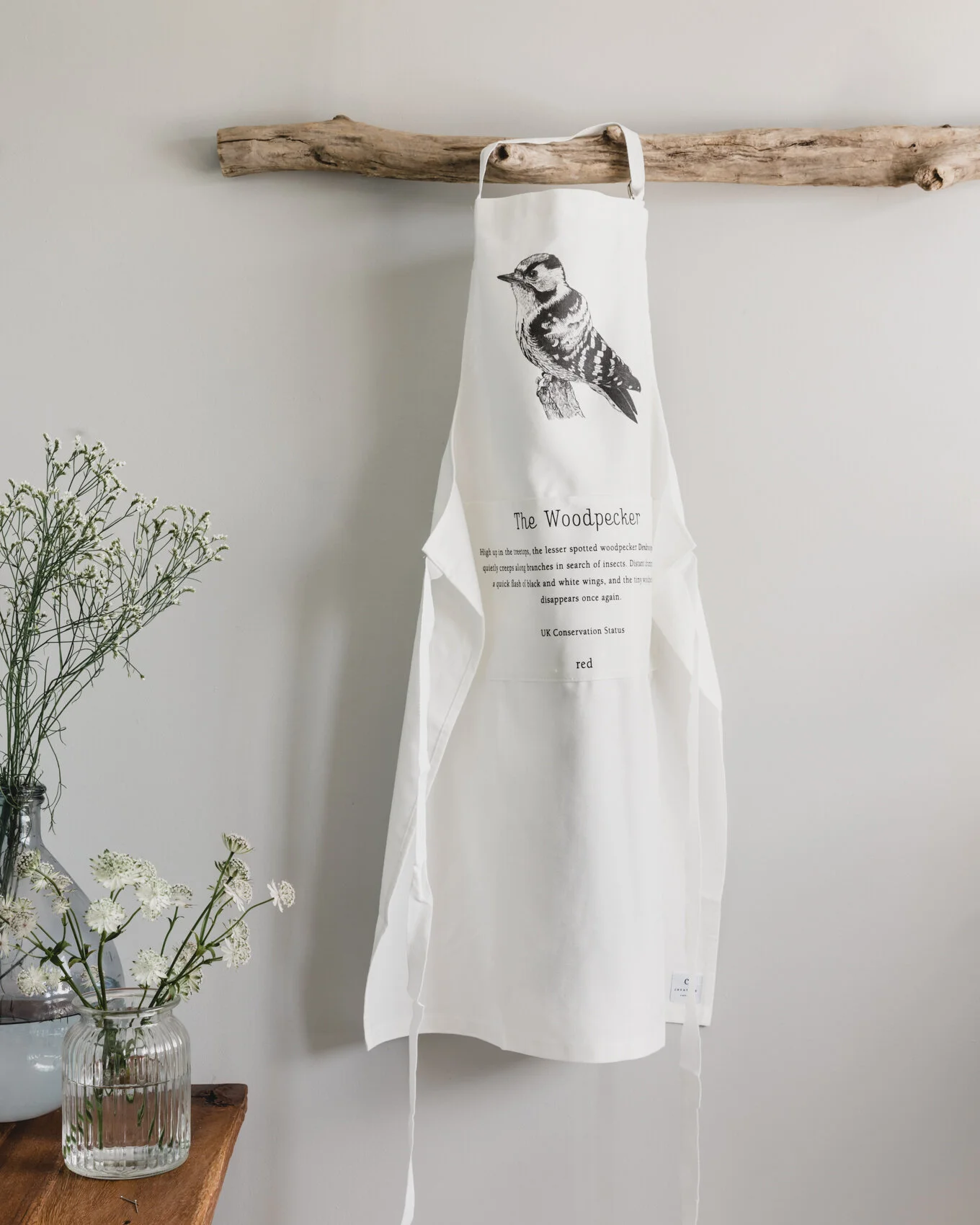
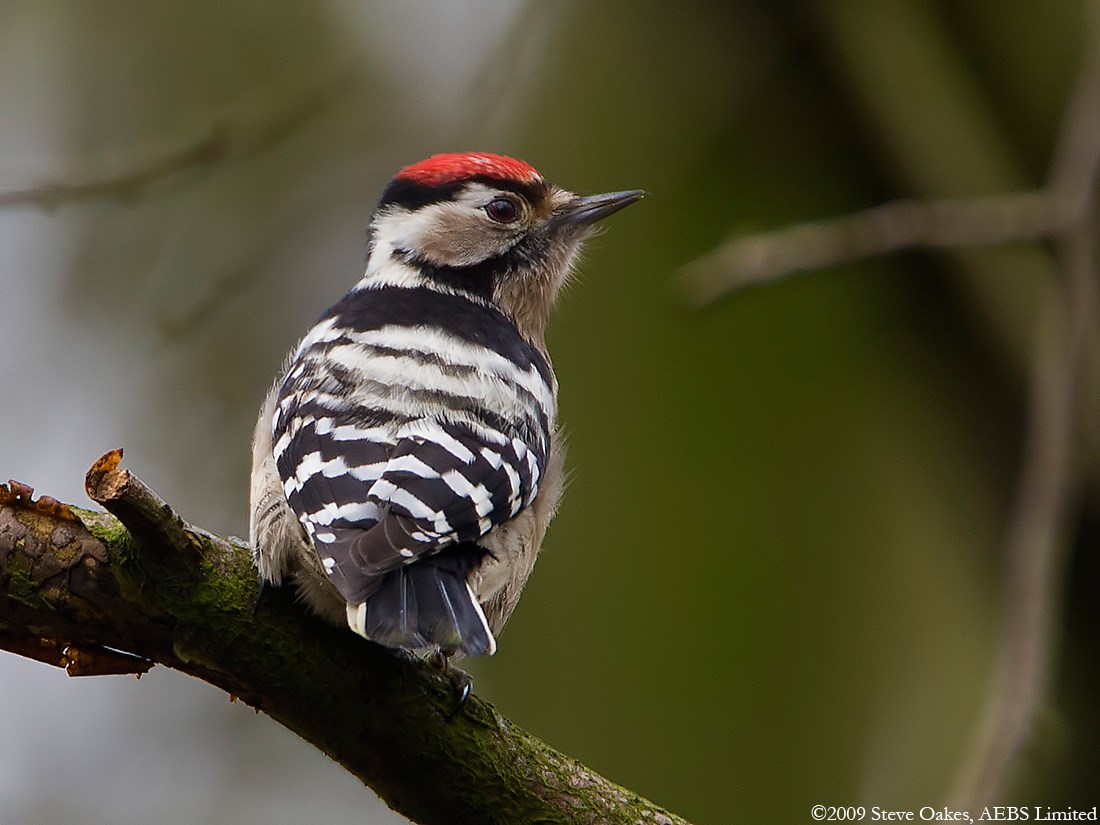
We donate 10% of the sale price of all our puffin and lesser spotted woodpecker ranges to the BTO. Here are some of the products in our bird range:


WIN Creature Candy & Summer Lane Studio Gifts During November

IMG_2409.JPG

For November, we've teamed up with Summer Lane Studio to offer you the chance to win a Creature Candy bee mug and notebook, and a Summer Lane Studio “Wish Upon a Flower” plantable wish gift. The flower gift set contains up to four personalised plantable cards for wishes, encouragement or your own message.

All you need to do is:

1. Sign up to the Creature Candy mailing list and…..

2. Follow Summer Lane Studio on Instagram

One lucky winner will be chosen at random ‪on 1st December‬.

Links to mailing lists / instagram can be found here:

https://www.creaturecandy.co.uk/sign-up

https://www.instagram.com/summerlanest/

Good Luck!

WIN Creature Candy & Big Wild Thought Bat Goodies Worth £59!

CC & Big Wild Thought.jpg

There is now another great reason why you should sign up to our mailing list. Every month, we are teaming up with brilliant, like minded businesses who’s aim is to make a difference to wildlife. Each month, we will be picking one lucky winner from our mailing list to win a prize bundle from Creature Candy and from another great wildlife focused business. 

This month we have teamed up with Big Wild Thought, a Sheffield based team who have created a brand that allows people to wear and care at the same time. Their clothing and accessory ranges raise awareness of animal conservation and 10% of all sale prices is donated to relevant wildlife charities - just like Creature Candy! 

All you have to do is sign up to both the Creature Candy and Big Wild Thought mailing lists to be in with a chance of winning a Creature Candy bat mug, bat notebook & a Big Wild Thought bat t-shirt and accessory bag, all worth £59!

The lucky winner will be announced on Friday 1st November, when we will also be revealing who we have teamed up with for November. 

Thanks for supporting us and Big Wild Thought, and good luck! 

Link to mailing lists is below:

https://www.creaturecandy.co.uk/sign-up

https://www.bigwildthought.co.uk/


Our Donations Are Helping Hedgehogs, Dormice and Hares

Creature Candy has just donated over £300 to the People’s Trust for Endangered Species, as a result of our customers and stockists support. On behalf of PTES we’d like to say a big thank you, as this money goes towards important research and conservation efforts to help stop the decline of many of our wild animals.

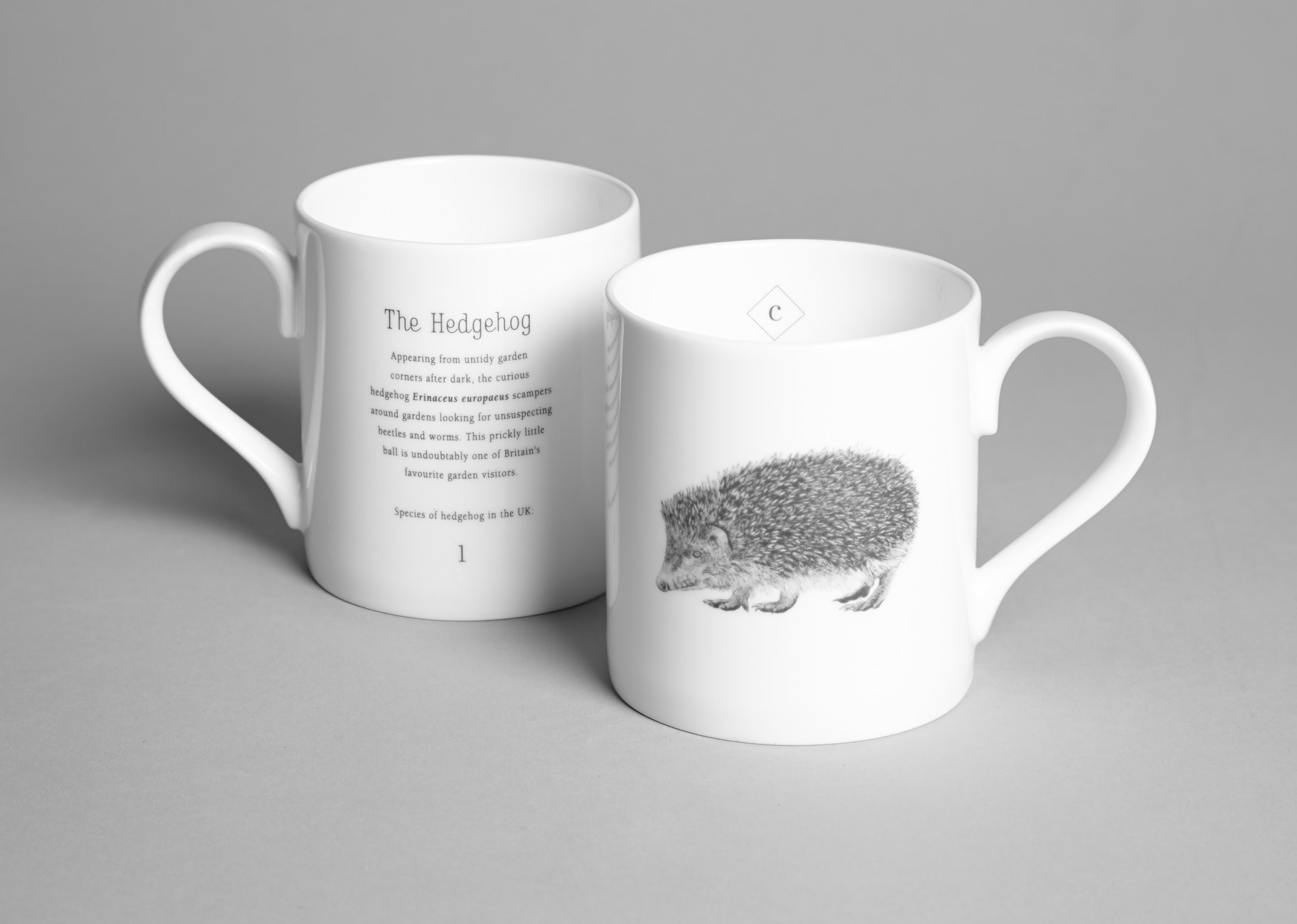
Creature Candy donates 10% of every sale of its hedgehog, dormouse and mountain hare products to PTES, so we’d like to tell you more about why this money is important and how it is used.

Hedgehogs

Image from PTES Website.

Image from PTES Website.

The Problem!

The hedgehog population is rapidly declining. A few years ago, the PTES mammal surveys revealed that since 2000, hedgehogs in Britain were declining at the same rate as tigers worldwide. In our countryside hedgehogs are losing precious hedgerows, field margins and woodlands. Intensive farming methods and pesticides used destroy hedgehogs’ natural habitat and kill off the insects they eat. In cities and towns gardens are increasingly fenced off and driveways paved over - hedgehogs struggle to get from garden to garden to find food and mates, and face increasingly busy and dangerous roads.

The Solution!

PTES are carrying out lots of research, practical action and raising awareness to help hedgehogs. They run Hedgehog Street, with the British Hedgehog Preservation Society, which encourages the public to become hedgehog champions, make hedgehog holes in their gardens and create hedgehog friendly neighbourhoods. They now have over 60,000 hedgehog champions.

PTES are carrying out research to understand the decline of both urban and rural hedgehogs. They are looking at new ways to survey hedgehogs, seeing if they use road tunnels to cross roads, what their relationship is with badgers, how farming and farming practices are affecting them, and which hedgehog houses they might prefer. They are also working with farmers so they can make their land more hedgehog friendly, and working with developers to encourage them to make new housing developments more friendly for hedgehogs.

Find out more about hedgehog research here.

Hazel Dormice

Image from PTES Website -Credit Jamie Edmonds

Image from PTES Website -Credit Jamie Edmonds

The Problem!

Hazel dormice were once common, but now they’re hanging on mostly in the southern parts of England and Wales. But changes in woodland management, farming practices, loss of hedgerows and the fragmentation of woodland have all taken a heavy toll on their living space.

The Solution!

The PTES dormouse campaign has three main elements:

  1. Their nationwide monitoring scheme keeps a close eye on how dormice are doing. They have over 25 years of records painstakingly collected by hundreds of volunteer monitors that guide our actions to save dormice.

  2. Their reintroduction programme has so far covered 12 counties at 22 sites. They have reintroduced over 900 dormice over the years back to areas where they had become extinct. They regularly check how they are faring and how far they’ve spread and advise on dormouse-friendly land management.

  3. It is so important to manage woodlands and hedgerows appropriately, so PTES provide training and guides for woodland managers and others looking after the land.

Mountain Hares

Image from PTES website - Caught in broad daylight: a rare photograph of a mountain hare found at its favourite night haunt: heather burn.

Image from PTES website - Caught in broad daylight: a rare photograph of a mountain hare found at its favourite night haunt: heather burn.

The Problem!

The Peak District mountain hares depend on healthy moorland: thriving on a diet of heather and grasses and seeking cover amongst deeper vegetation and rocks. They live in an isolated vulnerable population. Direct threats to them include heavy traffic on several major trunk roads, hunting and persecution. The busy road system that bisects the moors may act as a barrier to dispersal and small scale gene flow. Climate change is also a threat - increasing fire risk; wetter autumns can create feeding and shelter challenges for young leverets; severe winters can bring about a thaw-freeze, where a layer of snow can freeze solid, making it difficult for a hare to dig through to find food.

The Solution!

PTES are establishing an in-depth study to understand the sustainability of the present group of mountain hares in the Peak District. It’s hard to estimate the numbers of hares: they tend to lie low under deep vegetation. So they are assembling a new, novel combination of techniques, including line transect observational surveys, deployment of remote cameras and a drone camera. These methods also provide a good opportunity to evaluate hare and habitat associations and the effects of human infrastructure.

Genetic material will be obtained either from material such as dung samples or carcasses. This data will then be used to construct demographic models (including for example hare hotspot maps) for investigating how the mountain hare population may respond to changes in land-use, levels of persecution, interaction with brown hares, and also considering different climate change scenarios within the Park. The results of these demographic models will help to provide advice on protecting the existing present population, whilst identifying which are the most important population parameters to be prioritised for future hare reintroductions and population supplementations.

Shop with us and help save hedgehogs, dormice and mountain hares.


Why Do Hares Box?

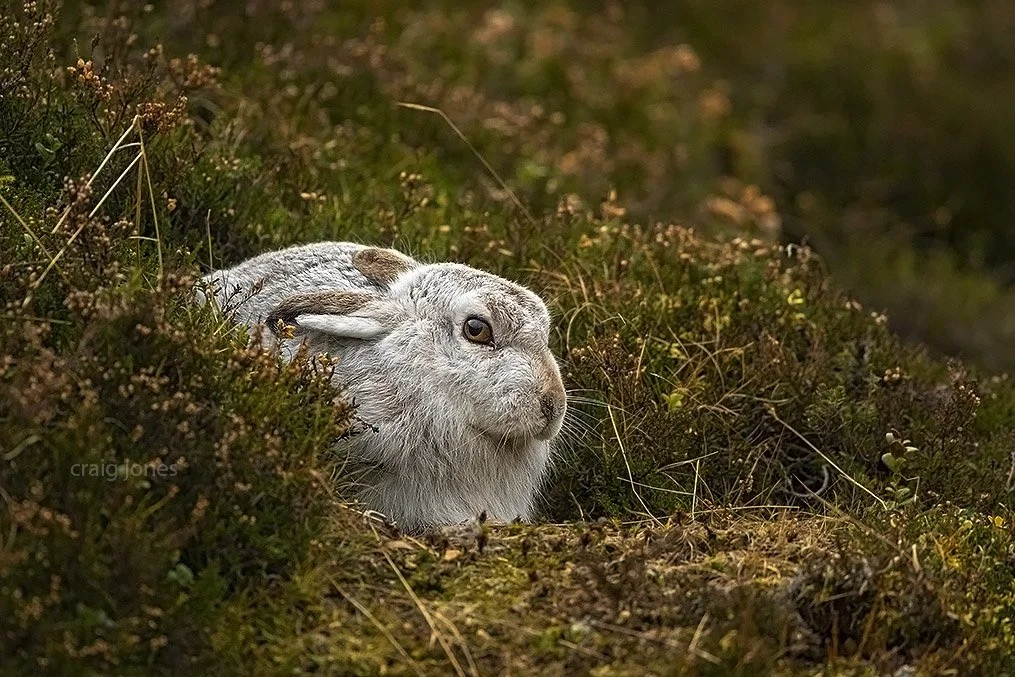
Mountain hare - by Creature Candy

Mountain hare - by Creature Candy

At this time of year, hares are famous for their tendency to ‘box’ frantically with one another. Hares do this because they are now in mating season, with the males (bucks) seeking out any females (does) that have come into season.

The boxing usually occurs when a male is being too persistent with a female, chasing her across fields in an attempt to mate. When she’s had enough, she’ll turn around and try to fend him off in a fierce boxing match!

Find out more about hares below:

Once a common sight, it is thought that brown hares in the UK have decreased by up to 80% in the last century, largely due to loss of habitat, hunting and changes in agricultural practices.

The mountain hare (pictured above) is the UK’s only native hare and was listed as “Near Threatened” in a recent review by the Mammal Society indicating that the species is of conservation concern in the UK. Mountain hare numbers on moorlands in the eastern Highlands have declined to less than one per cent of their initial levels, according to a newly published long-term scientific study.

These numbers are horrifying and it is vital that we do all we can to help protect our hares.

By purchasing any of our products featuring a mountain hare, you will be contributing to the important conservation efforts to help stop the decline of these beautiful mammals.

We donate 10% of the sale price of mountain hare products to the People’s Trust for Endangered Species. Take a look at our Mountain Hare product range below:

Supporting The National Bat Helpline

National Bat Helpline Volunteer - Photo taken from Bat Conservation Trust Website.

National Bat Helpline Volunteer - Photo taken from Bat Conservation Trust Website.

It’s the end of another year and we are delighted to announce we have just donated over £300 to the Bat Conservation Trust. This money will be used to help fund the National Bat Helpline, which relies on the hard work and dedication of hundreds of volunteers. This includes bat carers who rehabilitate injured bats, roost visitors who help homeowners with bat roosts and volunteers that answer phones on the Out Of Hours (OOH) helpline in the summer.

During 2017, 14,981 enquiries were received by the Helpline in total by phone, email and post. 2337 of these enquiries came through the OOH service. As a result of the help provided via the helpline, thousands of bats and their roosts are conserved each year.

The service is available to anyone who is interested in or concerned about bats. The Helpline can be reached on 0345 1300 228 or via email between 9.00am and 5.30pm on weekdays all year round, with an OOH service provided during the summer by trained volunteers.

We are very proud to be able to help fund such a wonderful charity and play an important role in bat conservation in the UK. Without our customers support this would not be possible, so to you we say a big THANK YOU!

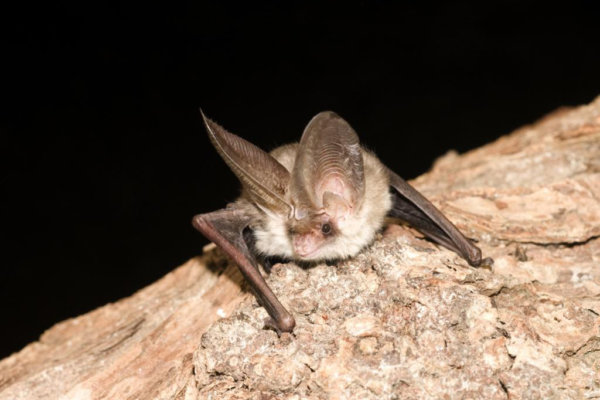
Photos above - brown long-eared bat and common pipistrelle bat, taken from Bat Conservation Trust website.

You can help support the BCT by purchasing some of our bat gifts. We donate 10% of every sale to the BCT.

It's Hedgehog Awareness Week!

Image: www.hedgehogstreet.org

Image: www.hedgehogstreet.org

This week is hedgehog awareness week, so if you are wondering how you can help hedgehogs, check out these top ten tips on what you can do to help hedgehogs in your garden here. You can also spread the word on social media using #hedgehogweek

Why not help raise funds for hedgehog conservation by purchasing one of our hedgehog products? We donate 10% of all our hedgehog products to the People's Trust for Endangered Species. 

A Few Hedgehog Facts:

  • The most important invertebrates in their diet are worms, beetles, slugs, caterpillars, earwigs and millipedes.

  • Reproduction occurs any time between April and September, but the period of greatest activity, ‘the rut’, occurs in May and June in Britain.

  • The average litter size of four or five young, of which two or three are usually weaned successfully.

  • As the name suggests they are often found near hedgerows, which provide ideal locations for nest sites, a good supply of invertebrates on which they feed, protection from predators and important movement corridors.

  • During hibernation hedgehogs are not really asleep, instead they drop their body temperature to match their surroundings and enter a state of torpor.

  • Hedgehogs usually hibernate from October/November through to March/April.

  • Badgers are the principal natural predator of hedgehogs in the UK, as they are the only creature strong enough to overcome the spiny defences. 

  • We appear to have lost around 30% of the population since 2002 and therefore it seems likely that there are now fewer than a million hedgehogs left in the UK.

  • Hedgehogs now appear to be declining in the UK at the same rate as tigers are globally – at around 5% a year, both in rural and urban habitats.

Shop Hedgehog Products: